





Split Rail Batten Heavy-Duty 150mm, pair (French Cleat)
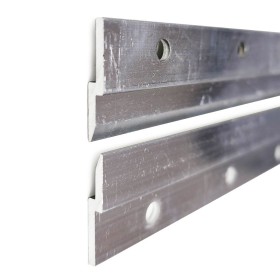
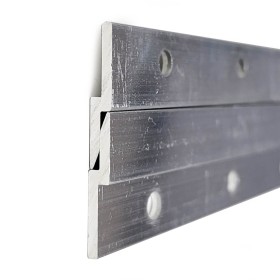
Split Rails type B are for concealed fixing of panels to walls. Easy to install and remove panels.
Two rails can be used together.
Split Rail Low profile rail allows for simple, concealed installation of smaller panels
Length: 152mm
Screws included
Price per pair
Split Batten (frenchcleat) Type B
Split Rails are for concealed fixing of panels to walls. Easy to install and remove panels.
Two rails can be used together.
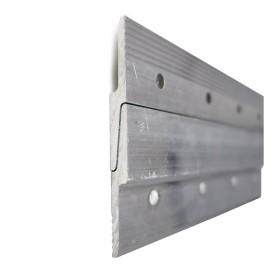
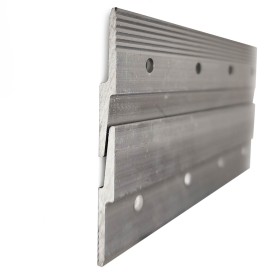
Low profile rail allows for simple, concealed installation of smaller panels
Requires 2 pieces per set – 1 for wall mounting & 1 to be attached to the back of the panel.
Length: 152mm
Screws included
Price per pair
French Cleat Maximum Load Capacity (Test Data)
| Cleat Length Type | Max Weight Capacity* |
| 152mm (Type A) | 30kg |
| 152mm (Type B) | 40kg |
| 1220mm (Type A) | 135kg |
| 1220mm (Type B) | 180kg |
* Test conditions and disclaimer. Maximum load rating is based on tests performed using an 18 mm MDF panel mounted to a concrete wall with 8G screws installed in all available fixing holes. Actual load capacity may vary depending on wall material, installation quality, fastener type, and environmental conditions. Always ensure the mounting surface and fixings are suitable for the intended load. The installer is responsible for verifying safe use in their specific application.
The test data provide upper bounds, but real‑world capacity depends on installation and conditions.
French Cleat Maximum Load Capacity Guide
The maximum safe load of a French cleat is determined by four interacting factors below.
1) Wall Material (Critical)
- Concrete, brick, or solid masonry provide the highest pull‑out and shear capacity.
- Screws driven into solid timber studs or metal studs. The more studs your cleat spans (and the more properly installed screws per stud), the higher and more reliable the load capacity — because the load is shared, bending moments per fastener fall, and redundancy improves safety
- Plasterboard(Drywall) is NOT suitable for heavy loads, unless you use heavy anchors or back‑blocking.
2) Screw Type and Installation (Critical)
Why it matters Screws transfer load from the cleat to the wall; poor screws or poor installation are the usual failure modes.
- Recommended:8G–10G wood screws, 50–75 mm when fastening into timber studs.
- Best practice: Use multiple screws spaced along the cleat so load is distributed; pre‑drill if necessary to avoid splitting.
- Masonry: Use appropriate masonry anchors or screws rated for that substrate.
- Metal studs: Use self‑tapping screws and consider backing plates or toggles for heavy loads.
3) Lever Arm Distance (how far the centre of mass projects from the wall)
Why it matters Outward pull creates a bending moment on the cleat and screws; the farther the centre of mass is from the wall, the lower the safe load.
- Short projection: Minimal moment, higher safe load.
- Long projection: Large moment, significantly reduced safe load.
- Design implication: Reduce projection, use longer cleats spanning multiple studs, or add bottom support for items that stick out.
4) Aluminium Strength
- Typical behaviour: Commercial Type A and Type B aluminium cleats can handle 100 kg+ in shear when properly mounted.
- Real‑world note: In most installations the aluminium itself is not the limiting factor — screws and substrate usually govern the safe load.
Practical Guidance and Rules of Thumb
- Design for the weakest link: assume screws or wall fail before the aluminium.
- Use longer cleats to span multiple studs and increase load distribution.
- Increase screw count rather than relying on a single heavy fastener.
- Minimise projection of heavy items or provide additional support under the load.
- Apply a safety factor: for permanent installations use a safety factor of 3/4 (i.e., safe working load ≈ test max * 3 / 4 ) unless installation quality and loading conditions are verified.
- Test in place: hang the item, then load gradually while checking for movement or deformation.
Takeaway
Use the test data as an upper bound and size your installation around the wall substrate, fastener quality and spacing, and lever arm. For aluminum cleats the metal is usually strong enough — focus on good fasteners, multiple attachment points, and reducing the distance the load projects from the wall.
Installation Overview
This split batten (French cleat) system is designed for the concealed fixing of panels, signage, or mirrors to walls. It allows for a clean, flush finish with no visible screws, making it easy to both install and remove the panels when needed.
Step-by-Step Installation
1. Separate the Pair: Each set requires two interlocking aluminum pieces—one section mounts to the wall, and the matching section attaches to the back of your panel.
2. Mount the Wall Rail:
- Position one of the rails against your wall at the desired height, ensuring it is perfectly level.
- Secure it into the wall studs or appropriate wall anchors using the provided screws.
- Tip: Make sure the interlocking lip of the rail is facing upward and outward from the wall.
3. Attach the Panel Rail:
- Line up the second rail on the back of the panel or item you want to hang.
- Secure it firmly into place using the included screws.
- Tip: Make sure the interlocking lip on the panel is facing downward and inward so it can drop into the wall mount.
4. Hang the Panel:
- Lift your panel slightly above the wall mount and lower it into place.
- The two low-profile sections will interlock seamlessly, holding the panel securely against the wall with a minimal, concealed gap.
- Discount 5%
- From 10pcs
- Discount 10%
- From 50pcs
- Discount 15%
- From 100pcs
-
152 mm Type A: 30 kg
-
152 mm Type B: 40 kg
-
1220 mm Type A: 135 kg
-
1220 mm Type B: 180 kg
- Wall Material (Critical).
- Screw Type and Installation (Critical)
- Lever Arm Distance (how far the centre of mass projects from the wall)
- Aluminium Strength
- Position one of the rails against your wall at the desired height, ensuring it is perfectly level.
- Secure it into the wall studs or appropriate wall anchors using the provided screws.
- Tip: Make sure the interlocking lip of the rail is facing upward and outward from the wall.
- Line up the second rail on the back of the panel or item you want to hang.
- Secure it firmly into place using the included screws.
- Tip: Make sure the interlocking lip on the panel is facing downward and inward so it can drop into the wall mount.
- Lift your panel slightly above the wall mount and lower it into place.
- The two low-profile sections will interlock seamlessly, holding the panel securely against the wall with a minimal, concealed gap.
Returns must be requested within 30 days of purchase. Items must be unused and in original packaging. Prior authorization is required. Change-of-mind or incorrect orders may incur up to a 20% restocking fee.
Find more information in Terms and Conditions here www.shopfittingsstore.com.au/terms-and-conditions-of-use-3
Yes. We ship Australia wide. No matter where you are, we will deliver to your door.
Shopfittings Store ships nationwide and has warehouses in Sydney, Melbourne, and the Gold Coast to ensure prompt delivery to all major capital cities and regional areas.
A French cleat can safely hold anywhere from 30 kg to 180 kg, depending on cleat type, length, wall material, screw quality, and installation. Test data shows:
*Real‑world capacity may be lower if the wall or fasteners are weaker than the cleat itself.
The maximum safe load of a French cleat is determined by four interacting factors
Please take time to read product description for more information Split Rail Batten Heavy-Duty 150mm, pair (French Cleat)
Installation Overview
Split batten (French cleat) system is designed for the concealed fixing of panels, signage, or mirrors to walls. It allows for a clean, flush finish with no visible screws, making it easy to both install and remove the panels when needed.
Step-by-Step Installation
1. Separate the Pair: Each set requires two interlocking aluminum pieces—one section mounts to the wall, and the matching section attaches to the back of your panel.
2. Mount the Wall Rail:
3. Attach the Panel Rail:
4. Hang the Panel:
feedback Report comment